
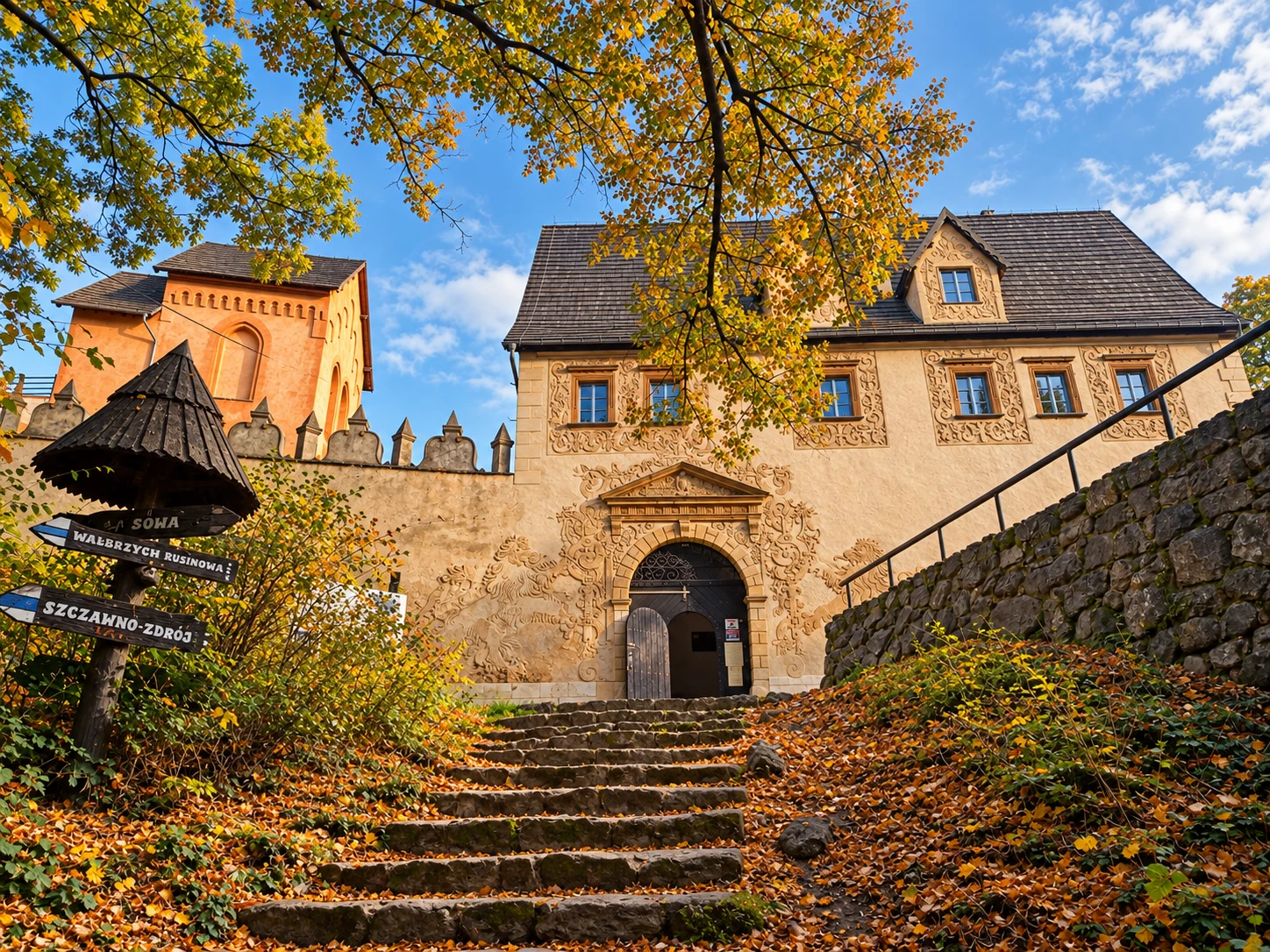
Start with the walk
The castle makes you earn your entrance.
Leave the car below the hill and follow the trees. In October, the leaves do most of the decorating. Then the forest opens onto a painted gatehouse, stone steps and a courtyard that feels unexpectedly intimate.
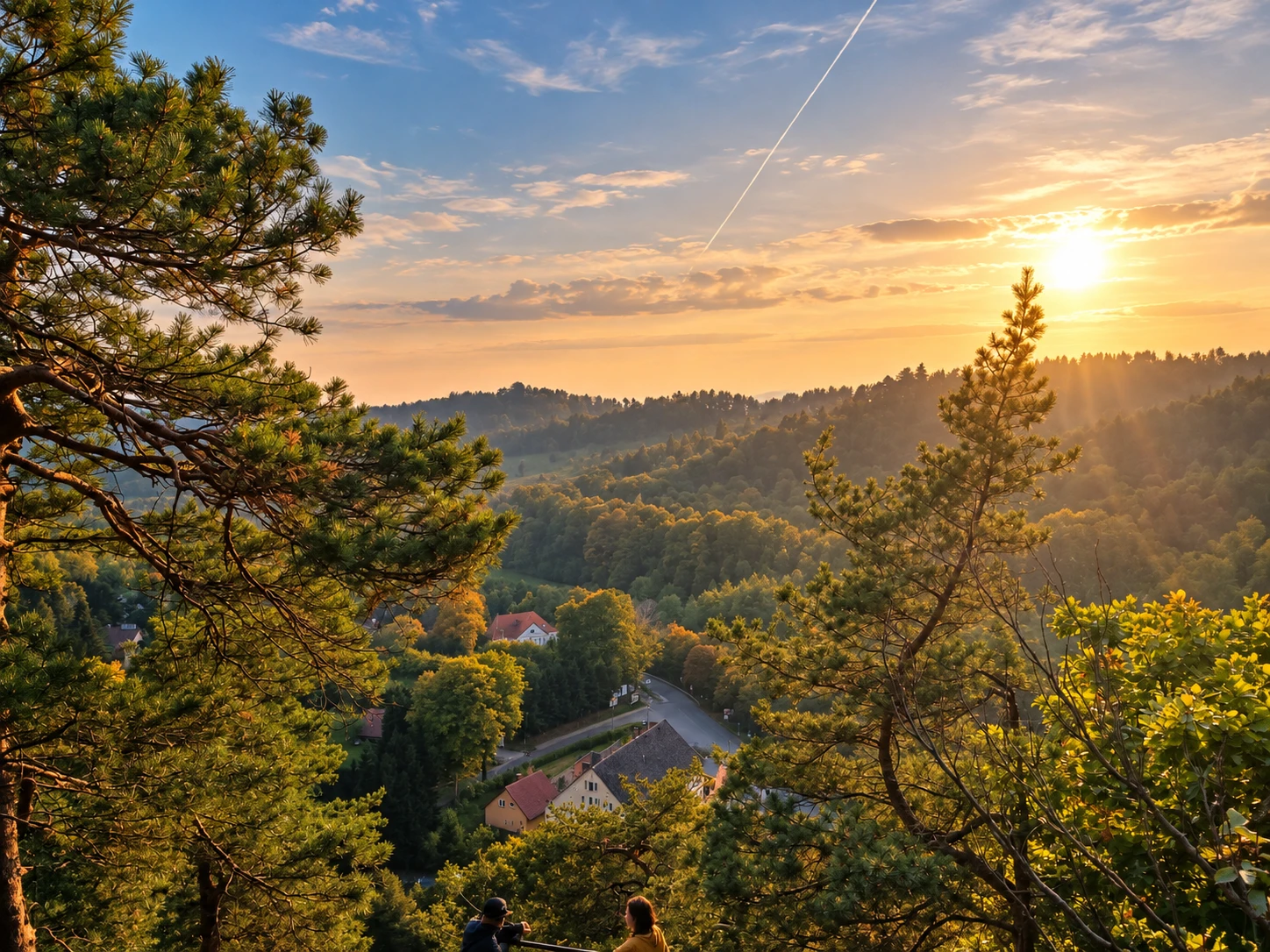
I came here on 4 October 2026. These are my photographs from that afternoon: the gate, the wooden passage, the beech path and the valley catching the last light. A castle visit does not have to begin with a date. Sometimes it begins with looking up.
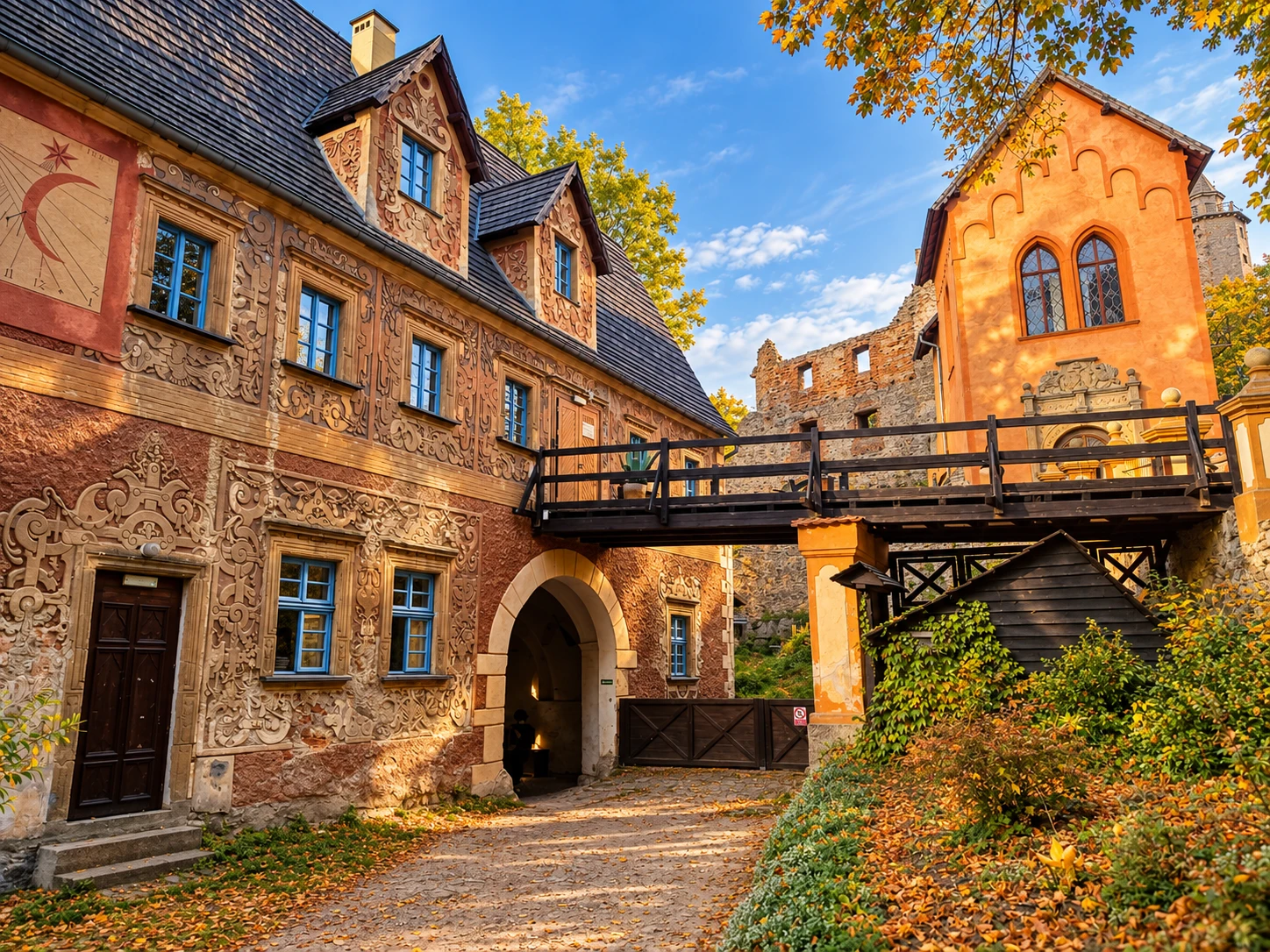
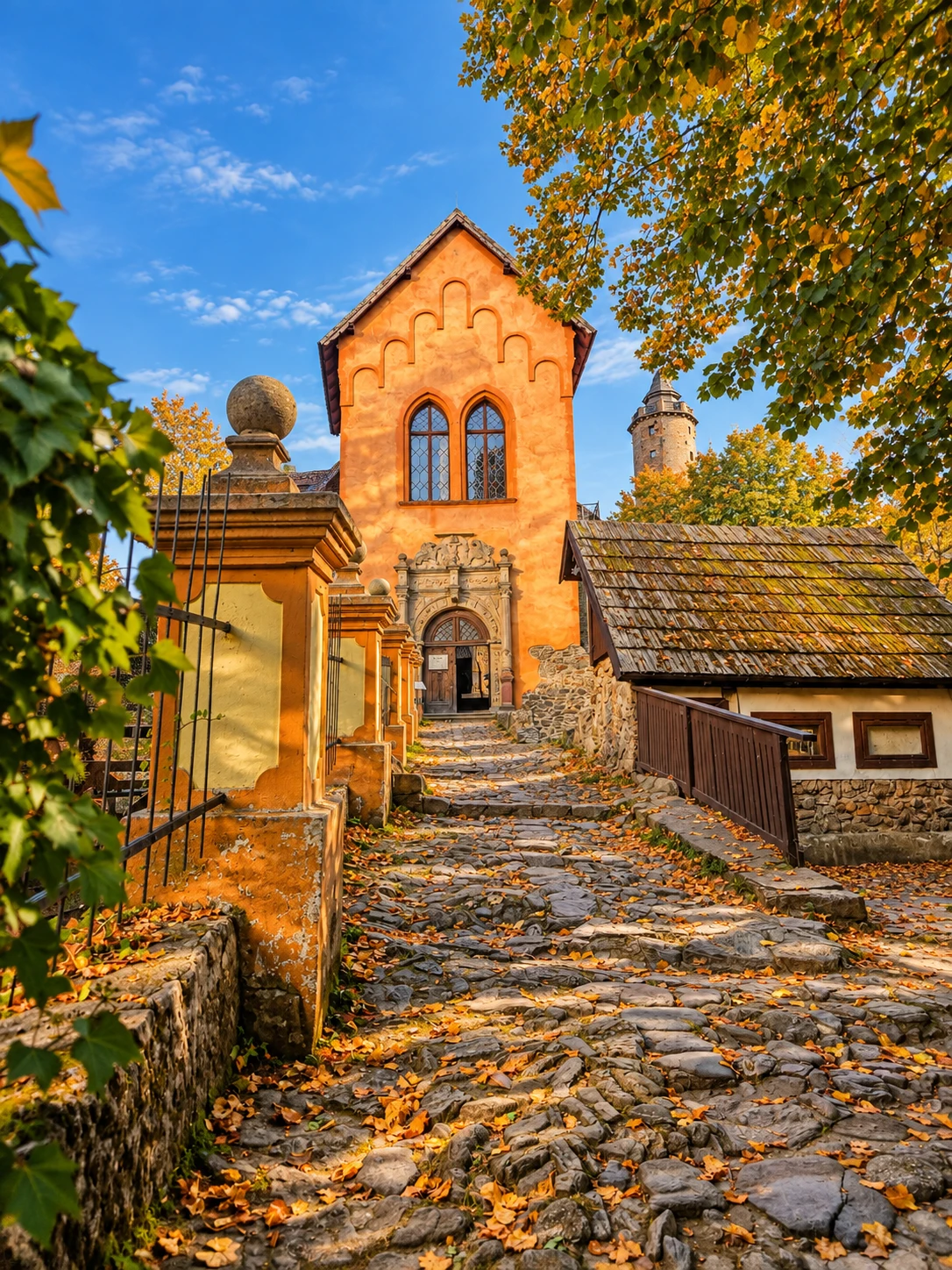
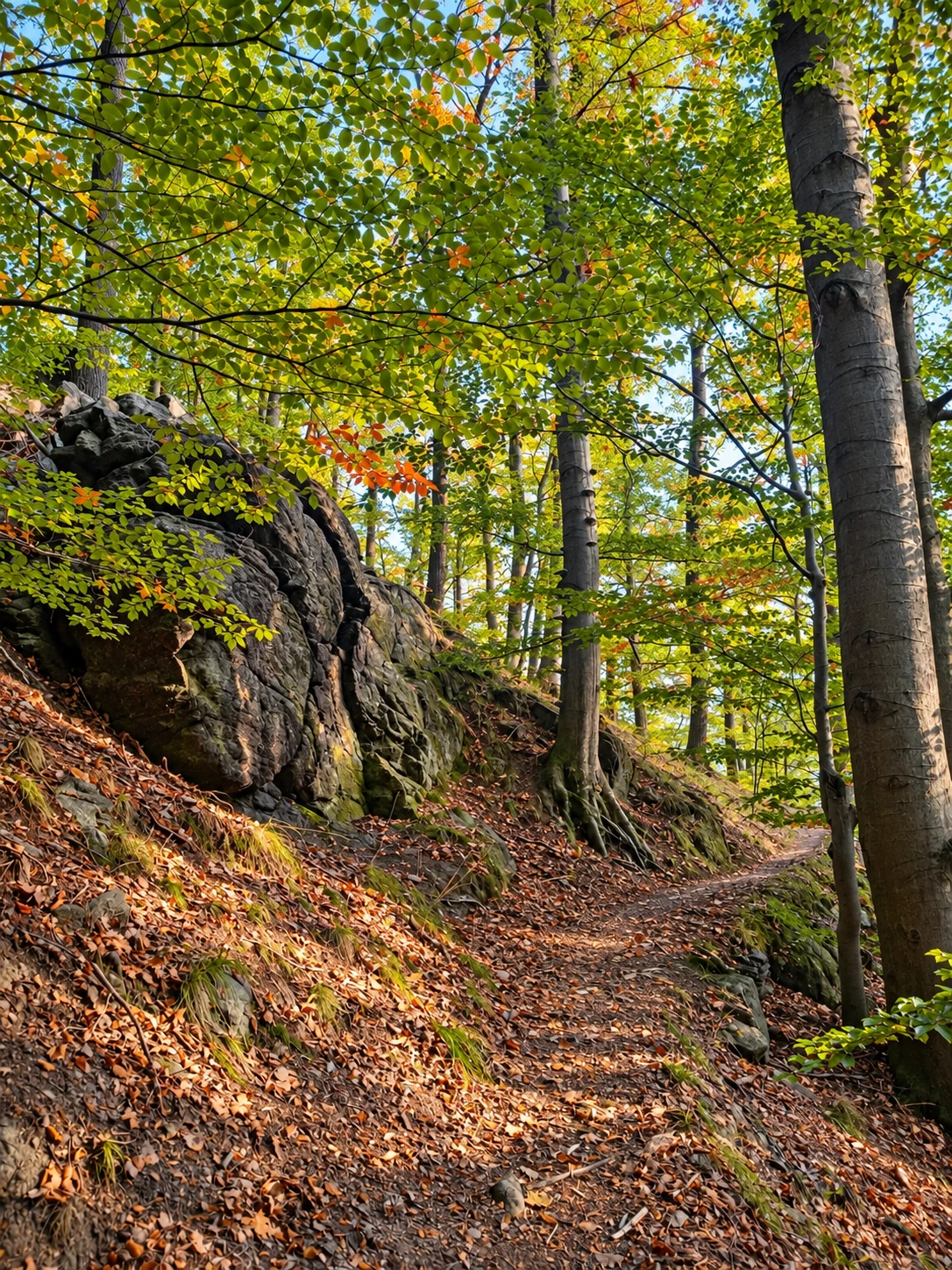
The courtyard, chapel and woodland approach — three views from my visit.
The story everyone remembers
Małgorzata had a rather final way of saying no.
Legend has it that the castellan’s daughter, Małgorzata, wanted nothing to do with the husband chosen for her. Her solution was to push the unfortunate suitor into the abyss. Her father saw what happened and condemned her to be walled up in the dungeon, where she starved.
It is a grim tale, and the castle gives it a physical address: Małgorzata’s dungeon is part of the visitor route. The remains associated with the story are presented as hers in the legend. Whether the tale grew around the display or the display grew around the tale, this is the room people remember long after they have forgotten the family tree.
Grodno has a White Lady too. Naturally. But Małgorzata is the one with the more troubling backstory.
An unexpected connection to home
How did Mihai Viteazul end up with a Silesian castle?
This is the detail that caught me personally: I grew up in Moldova. In Chișinău, Mihai Viteazul is a name you can meet on a street sign. Here, far away on a wooded Polish hill, he turns up again.
Castle histories recount that Emperor Rudolf II granted Grodno to Michael the Brave — Mihai Viteazul, his ally against the Ottoman Empire. The connection was brief, around the turn of the seventeenth century. Michael ruled Wallachia and, for a short time in 1600, brought Wallachia, Transylvania and Moldavia under his authority.
He may never have set foot in his Silesian property. That almost makes the story better: a castle could be a diplomatic gift, a reward, a piece on a political chessboard, while life in its courtyard carried on hundreds of kilometres from the campaigns that decided its owner’s fate.
The grant is described in this castle history; accounts vary on the exact dates and whether he visited.
Look closely before going inside
A Renaissance family album, written in stone.
The Logau family transformed the medieval stronghold into a residence. Their legacy is easiest to enjoy at walking speed: decorated plaster, carved portals, the chapel entrance and a row of eight coats of arms. Think of the heraldry as a family album with better weather resistance.
On the corner, look for the paired sundials bearing the date 1716. Two faces, two directions, one quiet reminder that this place was a home as well as a fortress. And notice the wooden passage above the courtyard: it is the sort of detail a grand panoramic photograph can miss.
One well, one bargain
How much digging is a man’s freedom worth?
Another local legend tells of a Turkish prisoner promised his freedom if he dug a well. On a rocky hilltop, that is a bargain with an awful lot of stone between its two sides. The story leaves you with a better question than a construction date: how long would you keep digging if every blow might bring you closer to going home?
The mystery beneath the courtyard
Letters from a man who may not have existed.
In the 1990s, a newspaper received mysterious letters from someone calling himself Leonhard von Schreck, supposedly a former German sapper. One claim concerned Grodno: a metal-clad chest allegedly hidden beneath the courtyard and protected by mines.
The journalist Joanna Lamparska followed these stories. The chest remains an unconfirmed claim. But stand in the courtyard and you can understand why this corner of Europe keeps producing treasure tales: layers of war, vanished owners, sealed spaces — and just enough silence for the imagination to get to work.
A second life
The ruin that nearly became building material.
By the early nineteenth century, Grodno was in trouble. Its stones were worth something even if its history was not. Professor Johann Gustav Büsching intervened to save it from demolition, helping turn a threatened ruin into a place people would come to see.
That new life included visitors, an inn and eventually a museum. The castle also slipped into fiction as Waldhof in Paul Keller’s Waldwinter, later filmed here. It has been a fortress, a residence, a ruin, a film setting and somewhere to stop for lunch. Quite a career for one hill.
Make a day of it
Forest first. Castle next. Valley afterwards.
Allow time for the uphill woodland approach as well as the rooms and tower. Wear shoes you trust on stone steps and leaves. The lake and valley below make a good continuation; Książ, Świdnica or the Walim underground sites can shape a longer outing, depending on your starting point.
Opening times, admission and guided-entry arrangements change. Check the castle’s visitor information before setting out. Castle admission and parking are paid separately from my guide fee.
A private guide day costs 700 PLN for up to 8 hours. Fuel is paid directly by you at the petrol station. Longer days need an agreed additional fee; shorter outings may receive a discount by agreement.
Plan a Grodno day →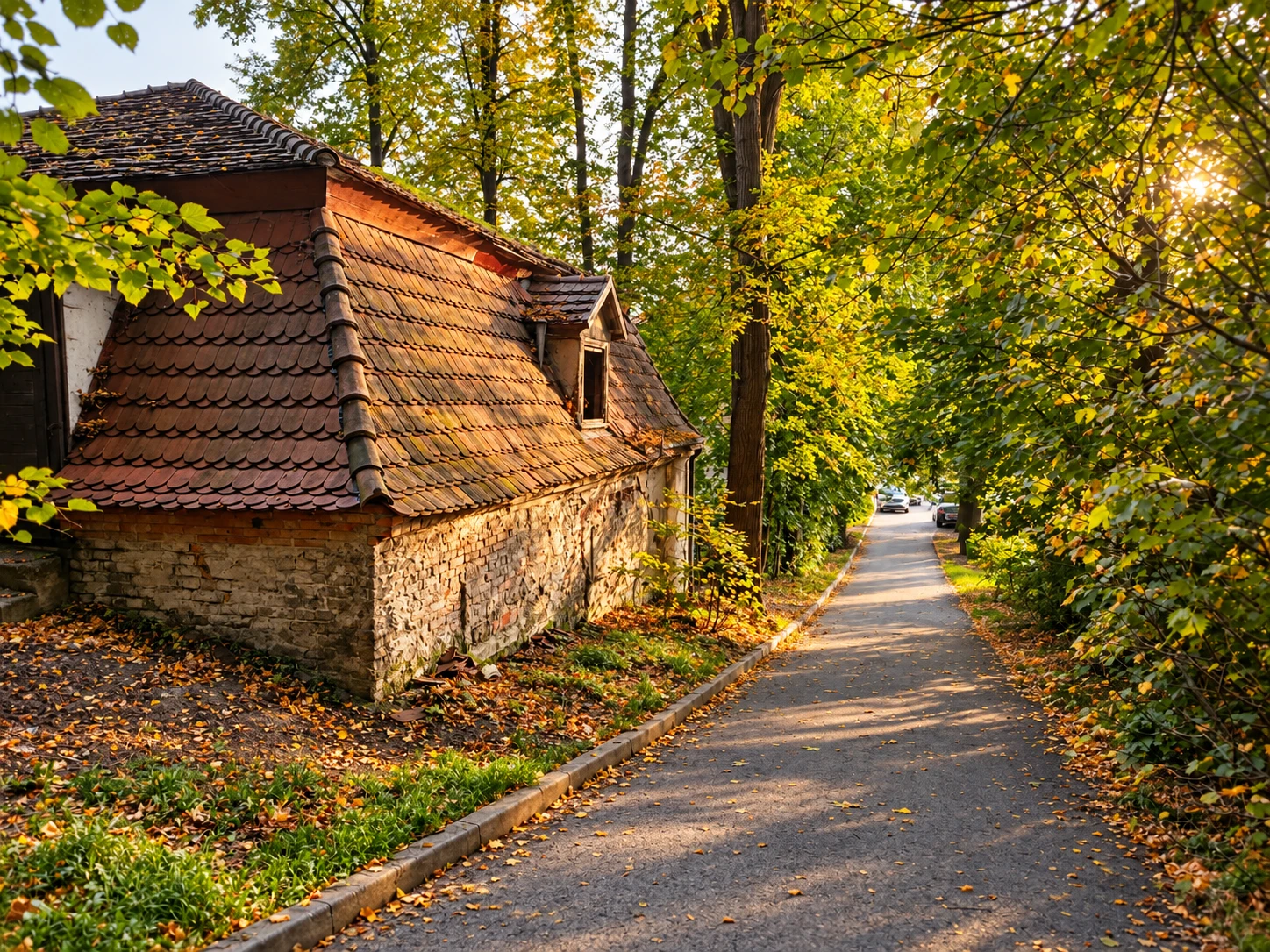
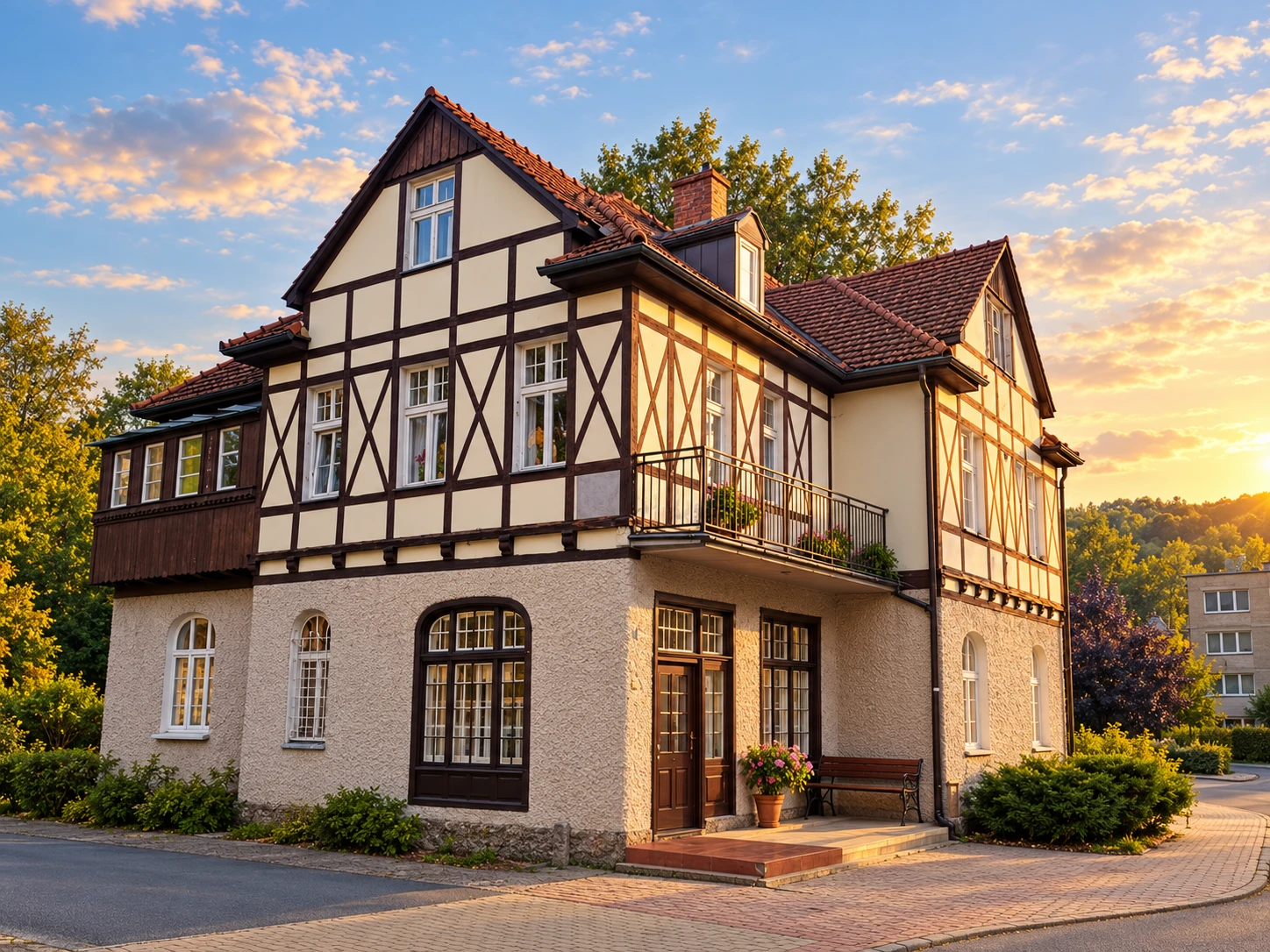
The valley and the village approach, photographed on the same afternoon.
Stories selected from our Grodno research dossier and visit notes. For the documented history, see the castle’s own account. The princess, prisoner and treasure stories are told here as folklore and reported claims.