
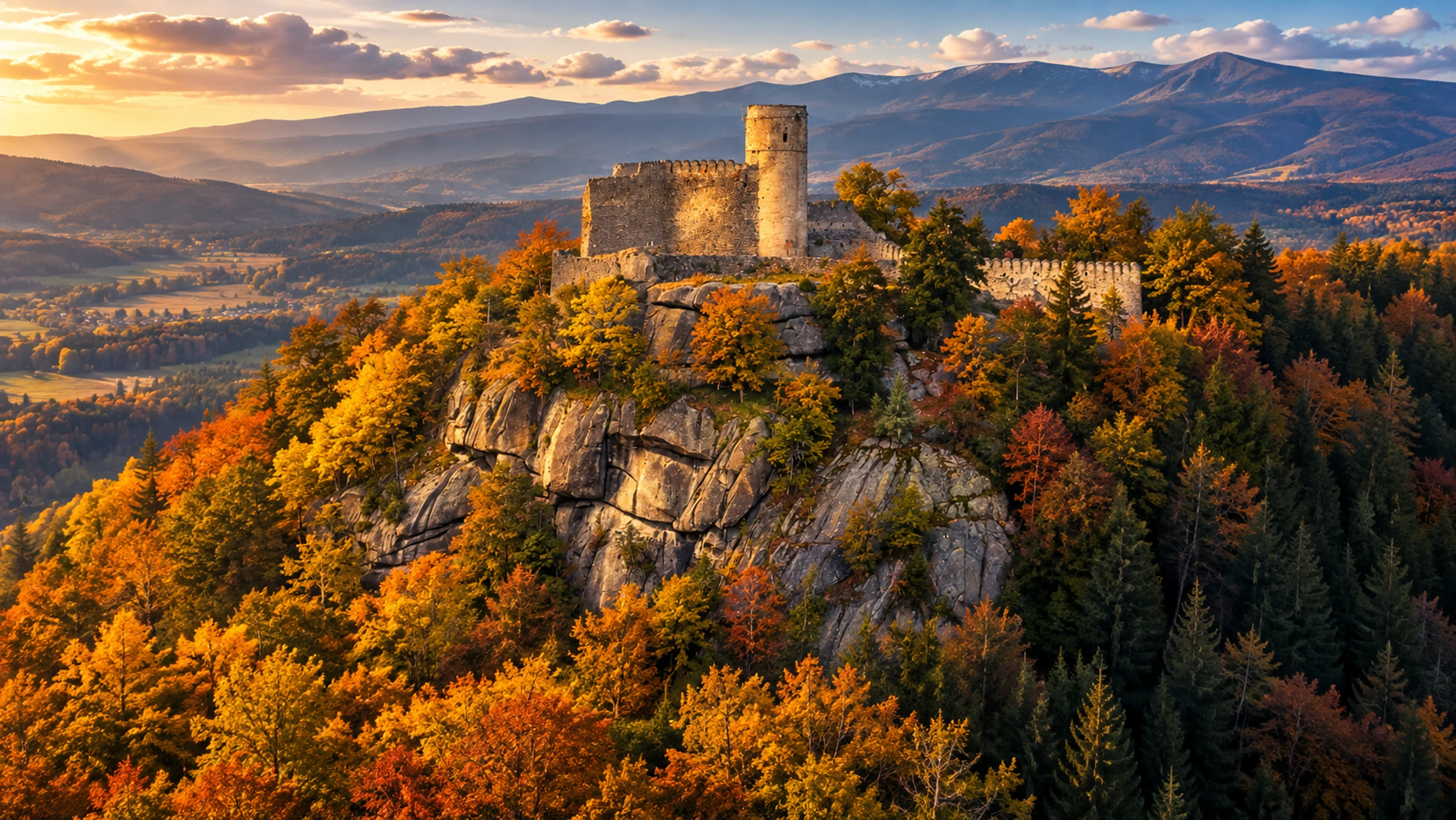
Would you ride around that?
Look at the outer walls, then at the drop beyond them. Legend has it that Kunegunda, the castle lord’s daughter, would marry only a knight who rode the whole circuit on horseback. Suitors came. Many never returned.
One rider finally completed the challenge. By then she wanted him to stay — but he refused her, condemning the deaths her test had caused. In the best-known ending, she threw herself into the abyss. Other versions give her a different fate. Kunegunda belongs to the castle’s folklore; no documented owner has been identified as the woman in the tale.
It is a story made for this place. From the courtyard, a wall is a wall. From the edge, you understand why the legend stuck.
The enemy came from the sky
In 1675, lightning set the castle alight. The fortress was left a ruin, and the family’s life continued elsewhere. What you walk through today is the aftermath: open rooms, broken walls and a tower above the trees. The weather did what the castle’s defences could not prevent.
A castle you reach on foot
Chojnik stands above Sobieszów, on the edge of Jelenia Góra. The approach is part of the visit: a climb through woodland before the stone walls appear. Wear shoes with grip and allow time for the ascent as well as the ruins. This is a walking outing, rather than a quick roadside photo stop.
The tower rewards the climb with a broad view of the foothills and mountains. We can plan Chojnik as the centre of a day, or combine it with another nearby place if the timing works. On a Wrocław–Prague journey it needs a deliberate detour and enough time to walk.
Stories drawn from the project’s Chojnik research and the castle’s own accounts: Kunegunda’s legend and castle history. Opening times, admission and trail conditions are checked when planning your visit.
Plan a Chojnik day →