Built to defend, shaped to surprise.
A Ducal Stronghold
First mentioned in 1277, Bolków was raised by Duke Bolesław II Rogatka as a defensive point of the Duchy of Świdnica-Jawor, and it guarded more than the road: the Silesian Piasts kept a treasury behind these walls. The castle changed hands between dukes and Bohemian kings, and each era left its masonry. In the sixteenth century a Renaissance rebuild wrapped the gothic core in a new outer wall with bastions, an answer to the age of gunpowder.
The Beak Tower
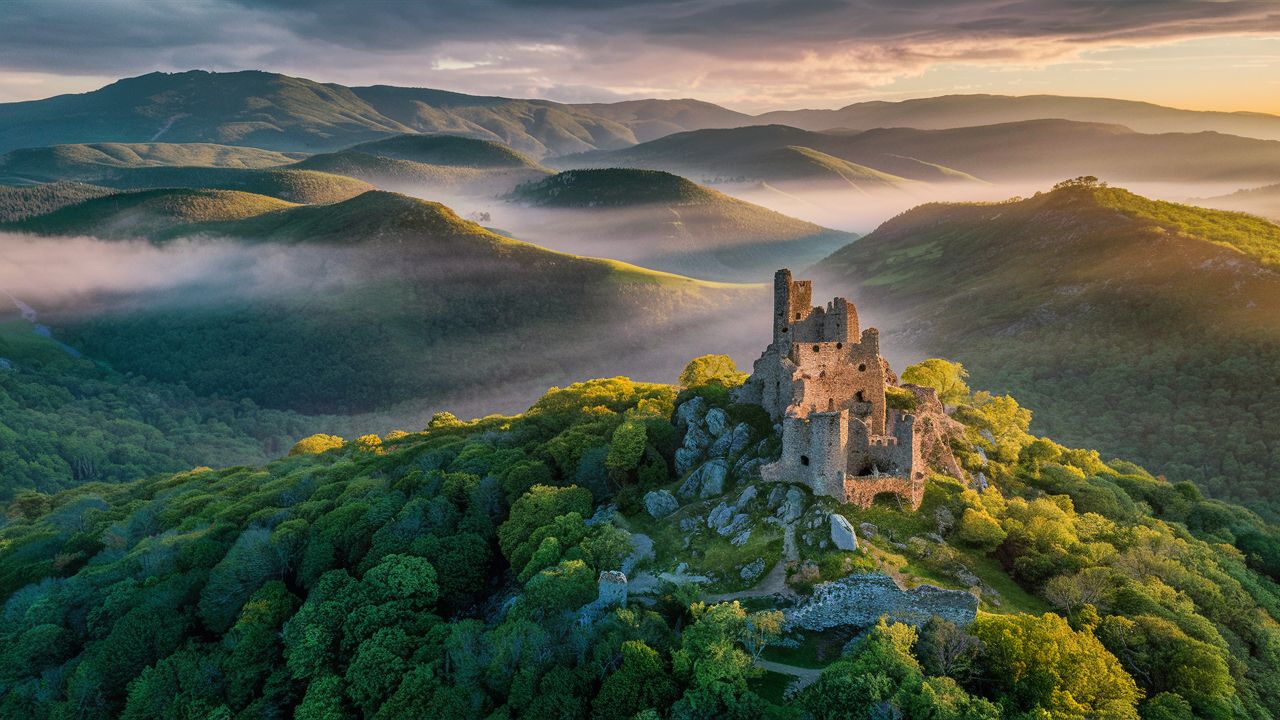
The detail everyone photographs is engineering, not decoration. The great defensive tower ends in a sharp, keel-shaped point, a "beak" unique in Polish defensive architecture, designed so that cannonballs would glance off rather than bite. You reach the tower the way the garrison did, over a bridge that was once a drawbridge. Standing under it, you understand why the Hussites besieged this castle and went home without it. Swedish troops did take it in 1646, and later centuries brought quieter owners: the von Zedlitz family, then the Cistercians of Krzeszów.
From Barracks to Knights Again
After the Napoleonic wars Russian soldiers sheltered here; between the wars the ruin became a youth hostel and then a museum. Today Bolków is a proper museum of Silesian fortresses and Piast history, and the courtyard does what it was always meant to do: hold people. Knightly tournaments run here in season, the Castle Party festival fills the walls with music each summer, and film crews, including The Witcher, have shot between these stones. Below the hill, the small town keeps a sloped market square lined with arcaded eighteenth-century townhouses.